
This book is for you if you're drawn to:
Fate, signs and coincidences
Big questions explored without clean answers
Starting over in a foreign country
The honest version of relocation and expat life
Paris beyond the postcards
Grey November light, the intimate city you live in
Complicated family histories
A post-Soviet childhood, absent parents, foster care
Resilience over motivation
Rebuilding yourself from the bottom, gradual, no easy breakthroughs
Trauma, therapy and self-understanding
Attachment, inherited patterns, quiet healing
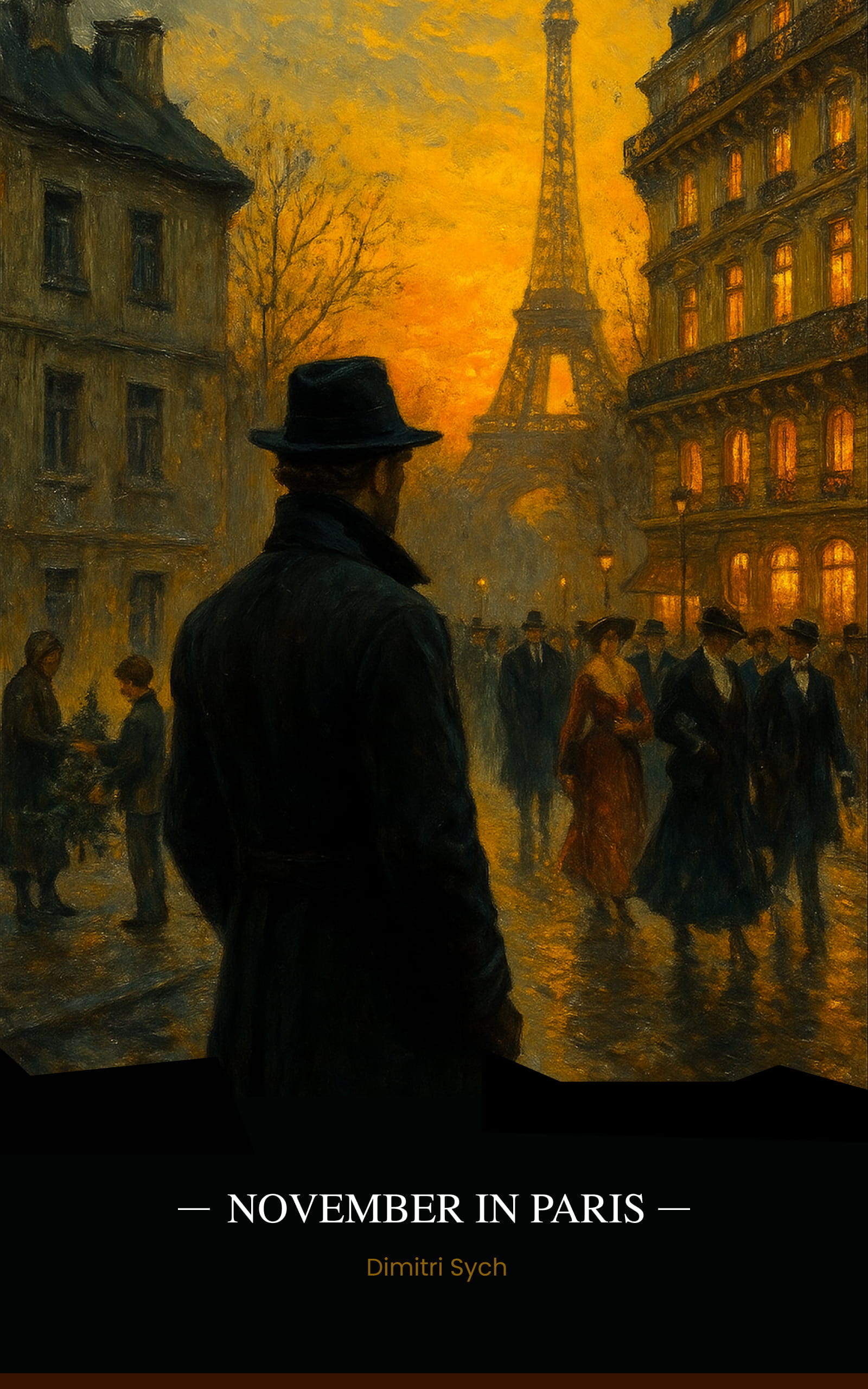
A Saturday evening. Max walks along the Seine in a thin November rain. He has a daughter, a dog, business deals at the Ritz, and a quiet life he has rebuilt from scratch. And he has a therapist’s office he keeps returning to — not to complain, but to finally face, honestly, what he kept locked away for years.
A post-Soviet courtyard. A nine-storey block, a market on three sides. An eleven-year-old boy collects scrap paper, bargains with adults as if the whole world were one vast marketplace, and one day finds a bold, almost cinematic way to feed his family before the New Year. So begins a lifelong journey: foster families and other people’s homes, a military academy, a huge city, falls and fresh starts — and Paris, which slowly turns from cold and foreign into the only place where everything is where it should be.
This is a story about growing up between poverty and privilege — about the marks adulthood doesn’t erase but learns to carry. About trauma and quiet healing. About a solitude that stops being emptiness and becomes a way of seeing more clearly. And about the strange signs and coincidences — a stranger with the face of an icon in a barber’s chair, names, dates, chance encounters — that seem to lead a man from one turning point of fate to the next.
There are no easy answers here, no loud motivational breakthroughs. There is honest, slow, atmospheric prose — Paris beyond the postcards, the city that breathes in the rain — and the quiet strength of a man who put himself back together. Based on a true story.
“November in Paris” is contemporary autofiction and psychological drama: a literary novel set in Paris, a story of childhood trauma and a post-Soviet upbringing, a novel about therapy, immigration and self-reinvention. For readers of reflective literary fiction about solitude, fate, signs and healing from the past.
From €4 · E-book & Paperback
A quiet, deeply personal story about Paris, change, and the moments that reshape who we are.
Alexandre M., Paris
What is "November in Paris" about?
It’s a contemporary autofiction novel about Max, an Eastern European entrepreneur rebuilding his identity in Paris after a turbulent post-Soviet childhood. Through therapy sessions and rain-soaked walks along the Seine, it explores trauma, immigration, solitude and quiet healing. Based on a true story.
What genre is the book?
Contemporary literary fiction and psychological drama – a real-life-inspired autofiction novel set in Paris. It blends a coming-of-age arc, a therapy-room narrative and atmospheric, introspective prose.
Is "November in Paris" based on a true story?
Yes. It is autofiction – built from real events, losses and realizations from the author’s own life, shaped into a novel.
Who should read this book?
Readers who have been through therapy or are considering it; expatriates and people who left everything behind to start over; anyone who grew up between poverty and privilege; and lovers of honest, reflective literary fiction and atmospheric Paris.
Is this a good book for expats living in Paris?
It’s one of the most honest books about what Paris actually feels like from the inside – not the postcard city, but the one you live in. Expats and relocants recognize the loneliness, the reinvention, and the slow turning of a foreign city into home.
Is it a book about childhood trauma and therapy?
Yes. The novel is built around therapy sessions that unpack a difficult post-Soviet childhood – attachment, loss, survival mechanisms, and how early hardship is carried, processed, and finally turned into strength.
How long is "November in Paris" and how long does it take to read?
About 174 pages – a compact, dense read with no filler. Most readers finish it in one or two sittings.
What languages and formats is it available in?
Available as e-book and paperback from €4, in English, French and Russian.
Who is the author, Dimitri Sych?
Dimitri Sych is a Paris-based writer and entrepreneur, founder of multiple digital projects, with 66,000+ Instagram followers and around 50M yearly reach. “November in Paris” is his debut novel, based on his own life.
Is it a heavy or bleak book?
It deals honestly with hard chapters, but it isn’t bleak – and it offers no cheap motivational answers either. At its core it’s a story of resilience and quiet strength: the past doesn’t break you, it teaches you.