
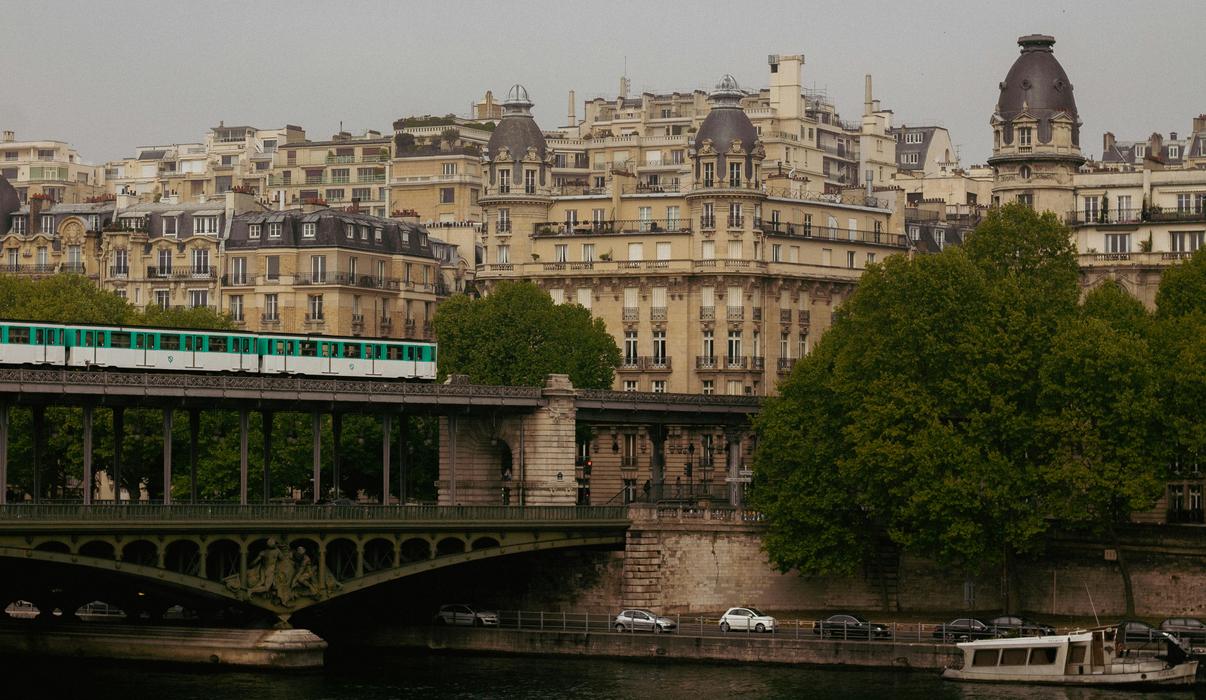
There is a question Max never asks out loud — he lives it. Throughout the book, through therapy sessions, walks across Paris, and memories of childhood, he keeps returning to the same point: is there something in his life beyond his own decisions?
By the end, he arrives at a conclusion. Simple in form, heavy in meaning.
“If there was a sign, then there was a choice. If everything had been predetermined, the road wouldn’t need to send signals.”
But before reaching that conclusion, the book first establishes something else entirely — that the world sometimes acts on its own, without waiting for you to read the signal.
Part One: Interventions — when the force acts without asking
These are not signs to be interpreted. These are moments when material circumstances change without Max’s participation. He did not choose them. They simply happened — and they altered the trajectory of his life.
Alexander at the market. The boy is eleven. His mother has just died. His grandmother died three months later. The guardianship council offers distant relatives — Max lies that none of them want him, and simply goes out walking. That day, at the market, a man appears who had once simply fed him without reason. He looks at him and says: “Alright, let’s go.” No phone call. No paperwork. No system. One person, in one place, on one day. Without him — the street. Possibly forever.
Money on the asphalt. A period when Max searches for work around the train station, among people with empty eyes. Hungry to the point of nausea, no money even for transport, walking along wet sidewalks counting tiles to avoid thinking about the emptiness ahead. He finds money. Just lying there. That day he does not have to sleep outside. This is not metaphor — it is a literal event with literal consequences.
An acquaintance in a city of three million. After the period with alcoholic neighbors, Max moves to another hostel in a different district. In that city of three million people, in the same building, the same entrance, the same apartment — he meets someone he knew from the courtyard where he grew up. The book notes: “Coincidence or fate — he didn’t yet understand.” But the meeting arrives as a reminder of the environment that must not be reproduced. Not as information to decode — as a collision.
Leaving two months before the war. For years, departure kept failing — work, housing, circumstances. Then suddenly everything aligns at once. A call to a visa consultant, documents, a ticket. Max describes the feeling precisely: “Like someone invisible pushed him toward the door.” Two months later, the war begins. Those who stayed found themselves in something he watched from a screen in Paris.
The invisible wall in business. Ten years of entrepreneurship bring a different kind of observation — not dramatic, but systemic. Resources appear where you least expect them. Effort sometimes fails entirely despite competence and correct strategy. Something that seemed pointless suddenly produces results. Max formulates it soberly: “There is a force that sometimes intervenes — and sometimes silently watches.”
The grandmother at the market. The coldest entry on this list. She worked, tried, searched for solutions — and the force did not intervene. Max recognizes this as a fact without justification: the invisible force “sometimes does not consider it necessary to interfere.” This is not comfort. It is honesty. And it is what prevents his worldview from becoming naive.
What unites these moments
All of them share one property: they changed the material trajectory of life. Not mood, not worldview — concrete circumstances. Housing, safety, country of residence, survival.
And they all arrived at points of maximum vulnerability — when Max had no resources, no plan, no support. As if the force does not replace effort, but appears precisely when effort has been exhausted.
Max does not idealize this. He sees the opposite too — moments when the force did not come. That is what makes the observation honest rather than religious.
Part Two: Signs — when the world speaks and you decide whether to listen
Signs are different. A sign is not an intervention — it is information. The world does not act on your behalf. It sends a signal. What you do with it is entirely yours.
The friends who warned him about Lily. They said it directly, in front of her. “Max, she’s not right for you.” He changed the subject. The sign existed. He chose not to hear it.
The feeling before departure. Before the documents, before the visa consultant, there was a feeling — an internal signal that this time was different. He had felt the pull before and ignored it. This time he listened. Two months later, the war confirmed what the signal had said.
The recurring 11:11. He notices it again and again, the same time, the same sequence. He does not know what to do with it — “can’t ignore it, can’t explain it.” A signal without a clear instruction. The choice of how to respond remains completely his.
The small signs around Lily — the ones he missed. Looking back in session with Sophie, Max realizes there were earlier signals he never processed. Friends. Situations. Patterns. He saw them and moved past. That was also a choice — even without knowing it was one.
The conclusion and its logic
“If there was a sign, then there was a choice. If everything had been predetermined, the road wouldn’t need to send signals.”
This is not intuition. It is a logical argument.
A sign, by definition, is information addressed to someone capable of responding. A warning only makes sense if the recipient can change behavior. If the outcome is already fixed, the warning is absurd — it serves no function.
Therefore the very existence of signs proves that outcomes are not fixed.
But this is where Max takes the argument one step further — the more painful step. If a sign implies choice, then ignoring a sign is also a choice. And one you are responsible for.
His friends warned him about Lily directly. The sign existed. The choice existed. He made it. That was not fate leading him to pain. That was him.
Three positions the book quietly dismantles
Pure determinism — everything is predetermined, humans merely execute a written script. But if the script is already written, why send warnings? Determinism is logically incompatible with the existence of signs. One of them has to be wrong.
Pure voluntarism — everything depends solely on me, there are no signs, just work and results. But experience dismantles this too. Ten years of entrepreneurship show that competence and effort do not guarantee outcomes. Voluntarism cannot explain the grandmother who tried and still failed. It cannot explain Alexander appearing on that specific day.
Fatalism — everything that happens is right, resistance is meaningless, accept and live. But Max saw moments when the force did not appear. If everything were automatically right, there would be no mother who died too early, no boy sitting on a cold curb with nowhere to go. The world is not automatically just. Sometimes it gives a chance — and that is not the same as a guarantee.
What remains
The position Max arrives at has no neat philosophical label. It is not theism, deism, or stoicism in any pure form. It is something forged from thirty-five years of life where the stakes were real.
Interventions happen — the world sometimes acts without asking. It places a man at a market on the right day, leaves money on the asphalt when there is nowhere to sleep.
Signs come too — quieter, addressed to you specifically, waiting for a response that may never come.
And neither one removes the responsibility that falls entirely on you.
The force intervenes — but does not control. It creates conditions. Opens doors. And watches what you do with them.
This is both comfort and burden. Comfort — because you are not alone. Burden — because you cannot hide behind fate.
Every intervention that arrived — you were there to receive it or you weren’t. Every sign you ignored — that was your choice. Every door you didn’t open — also yours.
“November in Paris” — a novel by Dimitri Sych. Available on Amazon in English, French, and Russian.