
Starting a company, not managing one
Practical systems, not concepts
Unclear strategy or unit economics
Founder mindset, not employee thinking
Action on Monday, not after a course
Amazon, Patagonia, Stripe real examples
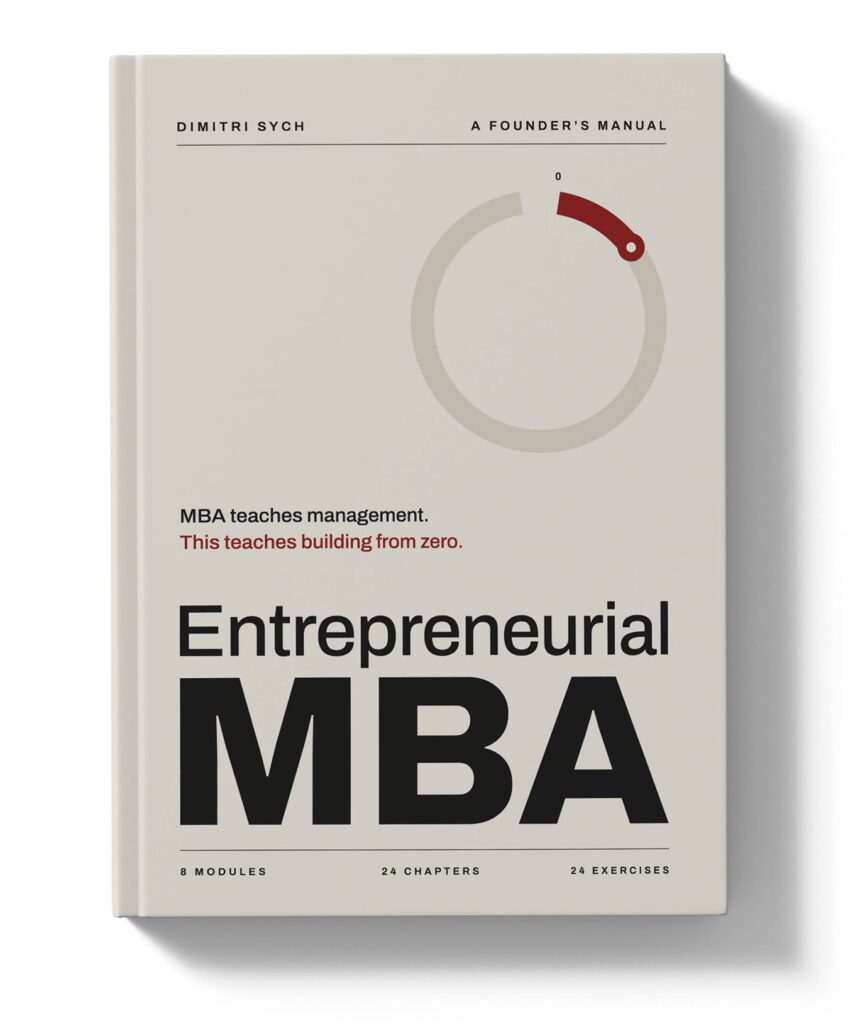
Not a business school textbook. An operational manual for founders who build companies with their own hands and answer for results with their own money, time, and reputation. 8 modules. 24 chapters. 24 exercises that build your founder’s workbook.
Based on HEC Paris strategic rigor, INSEAD speed and globality, Harvard case method. Translated entirely into founder language. Each chapter: concept, working framework, real company case studies, checklist, exercise for your business.
By the end you’ll have assembled a complete strategy: from market analysis to your personal decision-making operating system. Not memorized concepts. Built strategy.
Founders and early-stage operators. People building companies, not managing them. You’ll get more value if you have a real business or serious idea.
Most books teach concepts. This teaches sequences. Every chapter ends with an exercise for your actual business, not hypotheticals. You build a workbook as you read.
Yes. Each chapter is self-contained. But the best approach is reading modules in order—they build on each other. That’s how real companies actually develop.
Even better. You’ll recognize yourself in the frameworks. Use the book as a diagnostic tool: which modules answer your biggest burning questions right now?
Content is the same. Paperback works better for the exercises—you’ll mark it up, annotate, build your workbook on paper. Kindle works if you prefer reading and cross-referencing.
Amazon, Patagonia, Airbnb, Stripe, Bezos, Chouinard, and others. Each case is analyzed for what it teaches about one specific principle, not as inspiration porn.
To provide you with the best possible experience, we use technologies such as cookies to store and/or access information on your device.